B&B in Mendoza Argentina
The wineries have been visited, sightseeing done, now the need is for a quiet, comfortable place to relax, unwind and savor the ambiance of a small town away from the bustle of Mendoza. The place is Chacras de Coria – about 30 minutes south of Mendoza City Center and, within Chacras, the place is Finca Adalgisa.
Chacras, originally the summer retreat for Mendocinos due to its climate, has been “absorbed “ by the expansion of Mendoza, but it still retains all of its charm (e.g., cobblestone streets, colonial small church and plaza, small local restaurants with Argentinian and International cuisines).
Located 4 blocks from Chacra’s central plaza, on Puerreydon Street is Finca Adalgisa. Formerly a private house, the Finca has been expanded and become a bed and breakfast. What sets it apart is not just the physical infrastructure and location; rather it is the quality and friendliness of the staff. They are all extremely service oriented and cater to the guests.
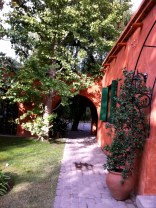
The house has been renovated but kept fairly intact – there is the library, sitting room, several guestrooms in the building, breakfast room – and pictures of the family are scattered throughout. This gives the impression and feeling of being a guest in someone’s house and not at a B&B. Gabriela runs the hotel. It is her house you are staying in! She, along with the rest of the staff, provides the personal family touch.
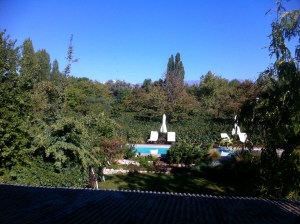
There is a separate two-story wing, perpendicular to the house, with 8 suites. The suites overlook the swimming pool and provide an unimpeded view of the Finca’s vineyards and the Andes.
The B&B is surrounded by 2 hectares (approximately 5 acres) of Malbec Vineyards. These grapes are used in the Finca to make and bottle their own top-end Malbec.
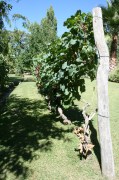
Guests are encouraged to walk through the vineyards along the trails and see the grapes and olive trees there.
Perhaps, the best part of the day at the Finca is the late afternoon. After spending a day sightseeing and visiting wineries, guests can sit either inside in the lounge, which is located right next to the winery, or outside on the terrace.
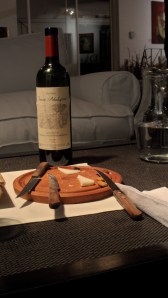
There while watching the sun setting over the Andes, guests are treated to a glass of the Finca Adalgisa Malbec – or a white if that is preferred- and a cheese/antipasto plate. This is the wine produced right there at the Finca in the cement vats located just off the lounge.
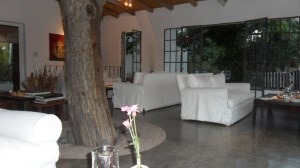
Sitting inside the lounge, one can’t help but notice the tree in the middle of it going up through the roof. That’s right, the lounge was built around the tree!
 The walk to the square, from the Finca is down a tree-lined avenue. The trees are so tall and have spread their branches so that they form a green canopy over the avenue. On Sundays, the square hosts an arts and craft fair showing products made by the local artists. There are also miniature horse rides for children. A pleasant Sunday afternoon can be spentsitting at one of the restaurants on the square, watching the world go by.
The staff can recommend places to eat and will also set up tours for the guests to visit wineries. (They can set up a tour that focuses on the smaller, traditional family-owned wineries in the region – a lot more personal and fun than taking a tour of the “large” well-known wineries!) They also provide concierge service to and from the airport. When in Mendoza, the Finca is worth a visit.
Things to keep in mind (which many people don’t) when selecting a B&B
When it comes time to pick a B&B for that (romantic/family visit/sightseeing adventure/all of the above), there are several things that come immediately to mind and which are used as selection criteria.
The first is undoubtedly location (is the darn thing anywhere near where I want to be? Places I want to see?). Second, and almost simultaneously comes price. (I’m going to pay how much for that? Wouldn’t it be better to simply stay at a 5 star Hotel?) Then finally comes “general ambiance” (“it looks nice or quaint or “picturesque”). Oh, yes, almost forgot – does it have Wi-Fi? (Again you are going to a B&B to get away from it all, no? So why Wi-Fi?)
These last two criteria are what one finds when going to the B&B website – never fails. (These comments are limited to B&Bs that have a website. If it doesn’t have a website, how will you find it? Maybe your fifth cousin twice removed stayed there before 1992 – no Internet then.) The site shows many pictures of the charming rooms, possibly the bathroom and usually the breakfast area. AND of course mentions they have Wi-Fi
BUT, there are several other things that should be kept in mind, or at least be aware of, before you actually show up at the B&B:
1- SOAP! Most B&Bs have switched to the soap that comes out in liquid form for dispensers on the shower stall wall. Ever try scrubbing with it when you don’t have a washcloth? To solve this situation either follow the advice from Douglas Adams (“The Hitchhiker’s Guide to the Galaxy) and always travel with a towel, or more practical – bring a bar of soap.
2- SHOWER CAPS? Most B&Bs don’t provide them (used to be standard equipment at all motels back in the 60’s – maybe they used them all up?). There are three alternatives available to solve this situation. 1- shower while trying to keep water from hair (a real trick when the shower stall measures 3 feet by 3 feet!); 2- Shower and let the water fall where it will (brings up the question of an available hairdryer –Did you bring one?); or 3- Bring your own shower cap.
3- SHAMPOO AND CREAM RINSE? Most B&Bs don’t provide them either. Either bring your own or use the liquid soap as a shampoo (probably what it was originally intended for?).
4- HAIR DRYER Puzzles! Though they may be available you may find the following challenges: 1- You have to hold down the “on button” at all times or it automatically, shuts down (annoying and at times hard to maneuver). 2- If you would like to sit down to blow-dry you hair, you cannot move the hair dyer form the bathroom because it is attached to the wall. The bathroom may be too small to bring in a chair (if there is a chair you could fit in the bathroom) or the mirror is too high (if you tried to sit down). 3- The hair- dryer might be found in a drawer in the bathroom or bedroom but there is no “regular” outlet in the bathroom. In the room, there are no available outlets by the desk/night table or dresser where there might be a mirror. (Bring an extension cord and of course an adapter.) 4- There might not be a hair-dyer. If you are not one of the lucky ones that does not need to depend on a blow dryer, put on a hat and either claim, with a straight face and without batting an eye, that you have “hat hair” or “this is the latest hair style in Hollywood”.
5- LIFT or ELEVATOR accessibility – Many B&Bs (particularly in Europe) are located in multi-story houses built circa 1745, but completely revamped and modernized. (That’s part of their “charm” and “quaintness”.) However, in the renovations, did they include a lift or elevator to get you to your room – which is of course located on the fourth floor? Usually the answer is no, and you have to carry your suitcases each of which weigh 40 pounds up three or four flights of stairs. It’s a great upper body workout climbing those stairs with them! Saves having to go to the Gym the next day. The solution is to either ask for a lower floor room ahead of time in the comments section usually provided on the website. Barring that, bring a small overnight bag for the items you will need that night (including the soap and/or towel and shower cap) and leave the big suitcases downstairs (in the suitcase closet/room- failing that behind the front desk or in the front room. That will usually solve the storage problem as the staff becomes creative). They may get lonely, but they’ll survive.
6- PARKING – Many of the B&Bs are located in central city locations (so they can be near all the places you are planning to visit). Most of these do not have available parking (guess you schlepped the 40 pound suitcases from the bus station or came by cab?). The options are to try to park on the street – which of course has a four-hour limit or is only available on alternate Tuesdays – or find a public parking lot – which unfailingly will be at least 4 blocks away, and there will either be a force five hurricane or a blizzard with white–out conditions when you need to leave or get the car. Unfortunately, there is no easy solution to this situation (unless you are travelling by cab), but at least ask ahead of time so you can be prepared.
7- ARE THERE RESTAURANTS THAT ARE WALKING DISTNACE OR NEARBY? The location is beautiful and not too far from the city/town center (that’s why you chose the place, right?), but there may not be restaurants, supermarkets/convenience stores, etc. nearby. They will probably be near the place where you parked the car in the hurricane or blizzard. Always carry a few snacks with you – cereal bars and nuts are easy to transport.
8- A PLUG FOR THE SINK – if you do some light washing using Woolite or other detergents, it might be challenging if there is no way to hold the water in the sink long enough to soak your clothing. Bring along one of those little rubber things that are used for opening jars and bottles – they usually have some ad for a product or company you would never use printed on them. That’s how they can be identified as jar/bottle openers. Put that on top of the drain and fill the sink with water. Water pressure will keep the “plug” in place.
Most B&B owners are very friendly and want to cater to the needs of the guests. They live off referrals. But the above-mentioned concerns are rarely top of their mind, so make them top of yours. Keep in mind that solving these situations may require that you bring an extra suitcase for the soap, hairdryer, shampoo and cream rinse, extension cord, adapter snacks and sink plug. Unfortunately, that can’t be helped.
Surf, sand, dune grass and….. Horseshoe Crabs
When visiting the Cape next time, take a detour to Long Beach (between Centreville and Osterville).
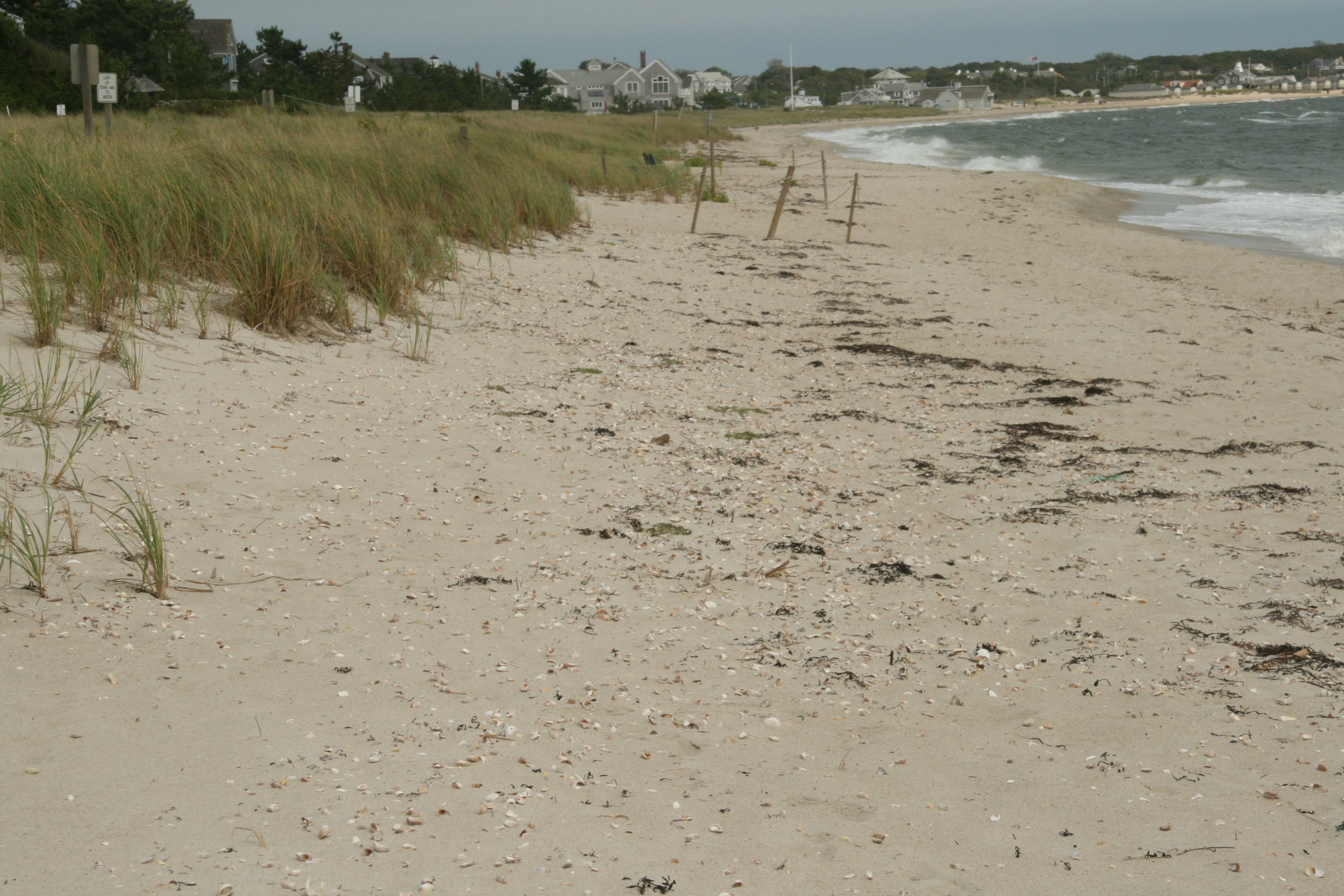
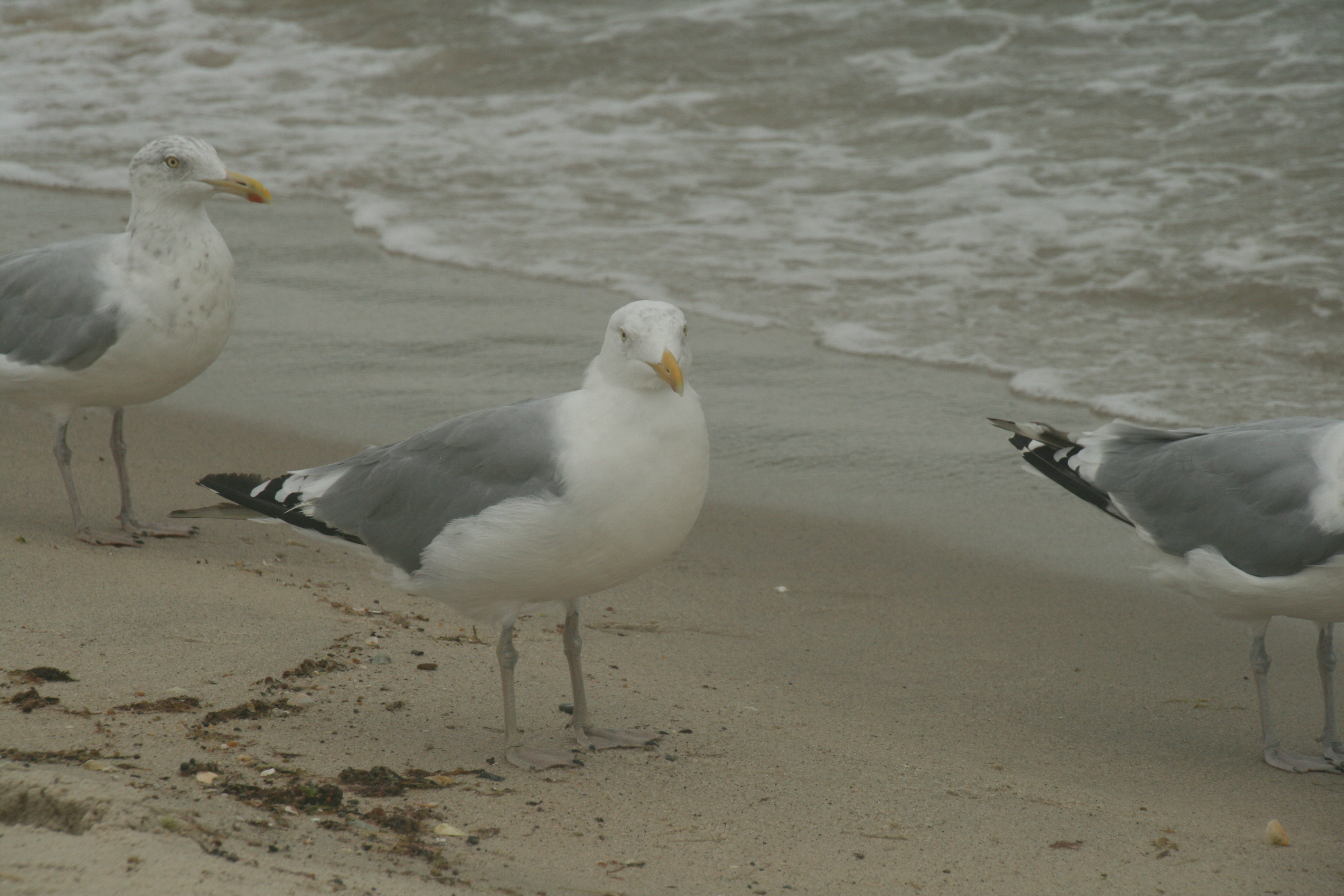
The day we visited was a rather windy day, and the surf was up. Walking on the sand, it was very hard to keep one’s hat on, and in fact mine decided to go for a short flight (luckily rescued before getting taken by one of the many seagulls). The gulls would just hang in the wind, not moving about ten feet off the ground. Amazing how they can do that without flapping their wings! These were the guys who went after my hat
The beach is really on a very narrow but long island. On one side is the ocean and on the other is the outlet from the river to the sea.
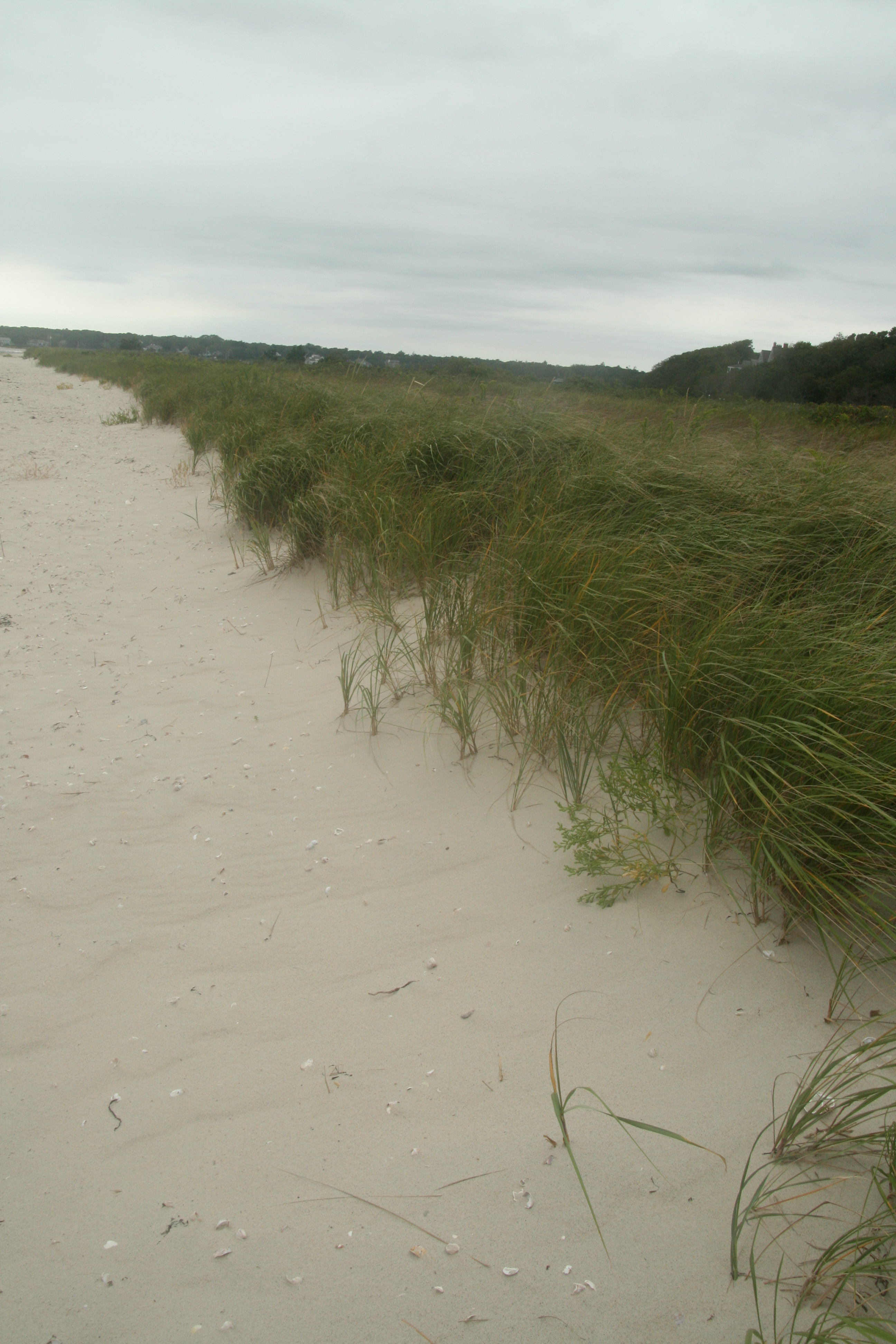
 Along the top of the sand dunes, were strands of dune grass. When the wind would hit them, they appeared to be dancing or be like waves in the ocean but on the sand.
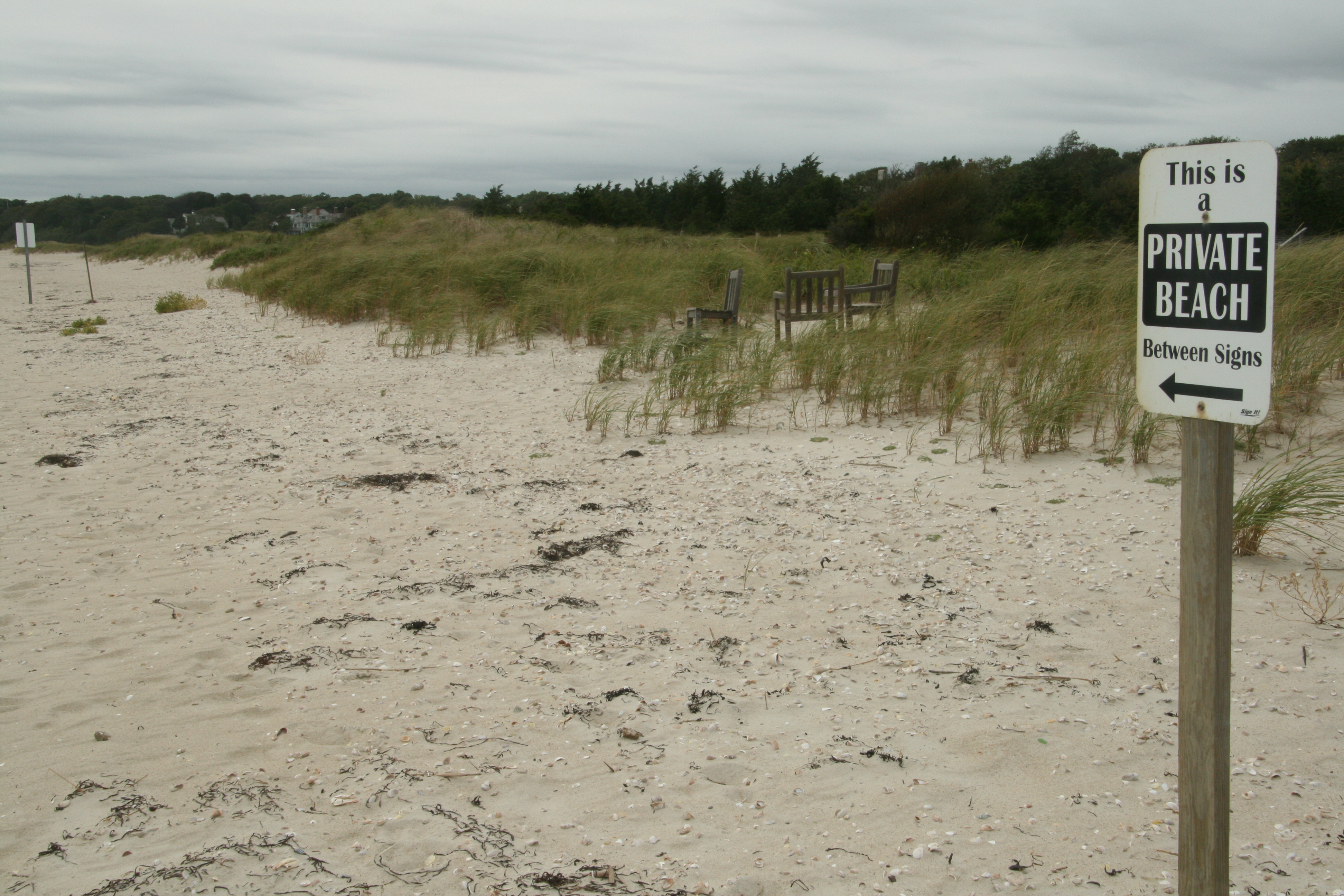
Another interesting feature of the beach is that parts of it are private. Every so often, walking on the sand between the grass and the ocean, there are these signs stating that that portion of the beach is private. Then 30 yards later, the beach is public again – a bit confusing. But upon reading the fine print on the signs, one can detect that it is OK to cross the private stretch as you proceed to the public stretch and don’t linger. Since we didn’t have a timer, and no specific time was specified, it was somewhat difficult to determine what constituted linger versus, say, walking slowly.
However, it is at the far end or tip of the beach that the most unusual sight was spotted. At first I thought that they were coconuts floating on top of the waves. Then realizing that there are no palm trees on the Cape (that I’m aware of), it was necessary to investigate. The phenomenon was explained when walking a little further down the beach; we saw on the sand that there were dozens of Horseshoe crabs of all sizes (and all sexes, I guess – hard to distinguish).
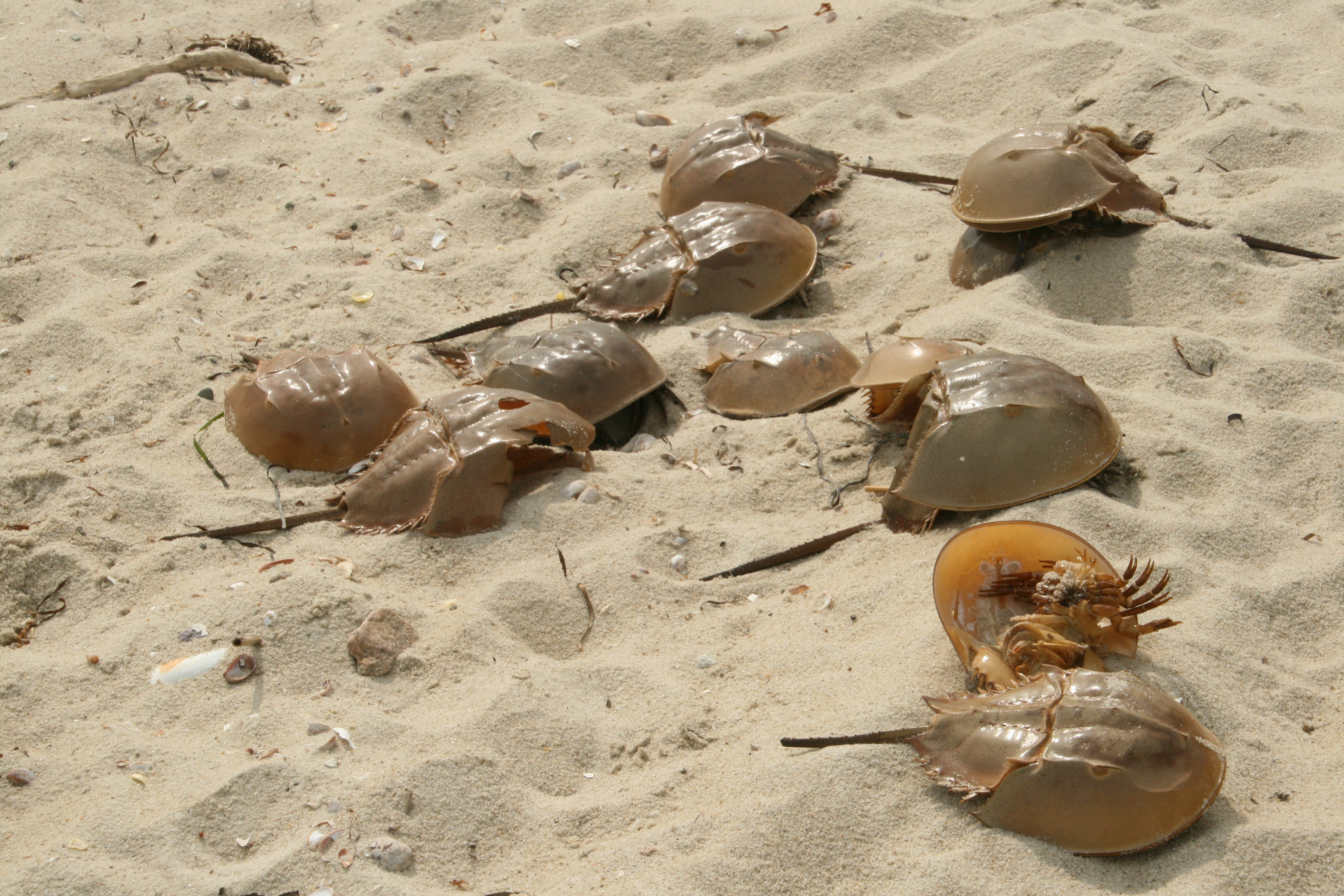
The high tide must have pushed them on the sand and then left them high and dry! Some had been pulled back into the ocean and that was what was floating on top of the waves. But I’ll leave you with this fact: the waves were pushing them in a direction parallel to the shore not up on the shore. We followed them along the shore back the way we had come, and they never came ashore – stayed out there riding the crests of the waves.
Could this have been a horseshoe crab convention, which did not end well? It’s a puzzle to me.
What do Law enforcement-related buildings and luxury hotels have in common?
Building “recycling” Boston Style.
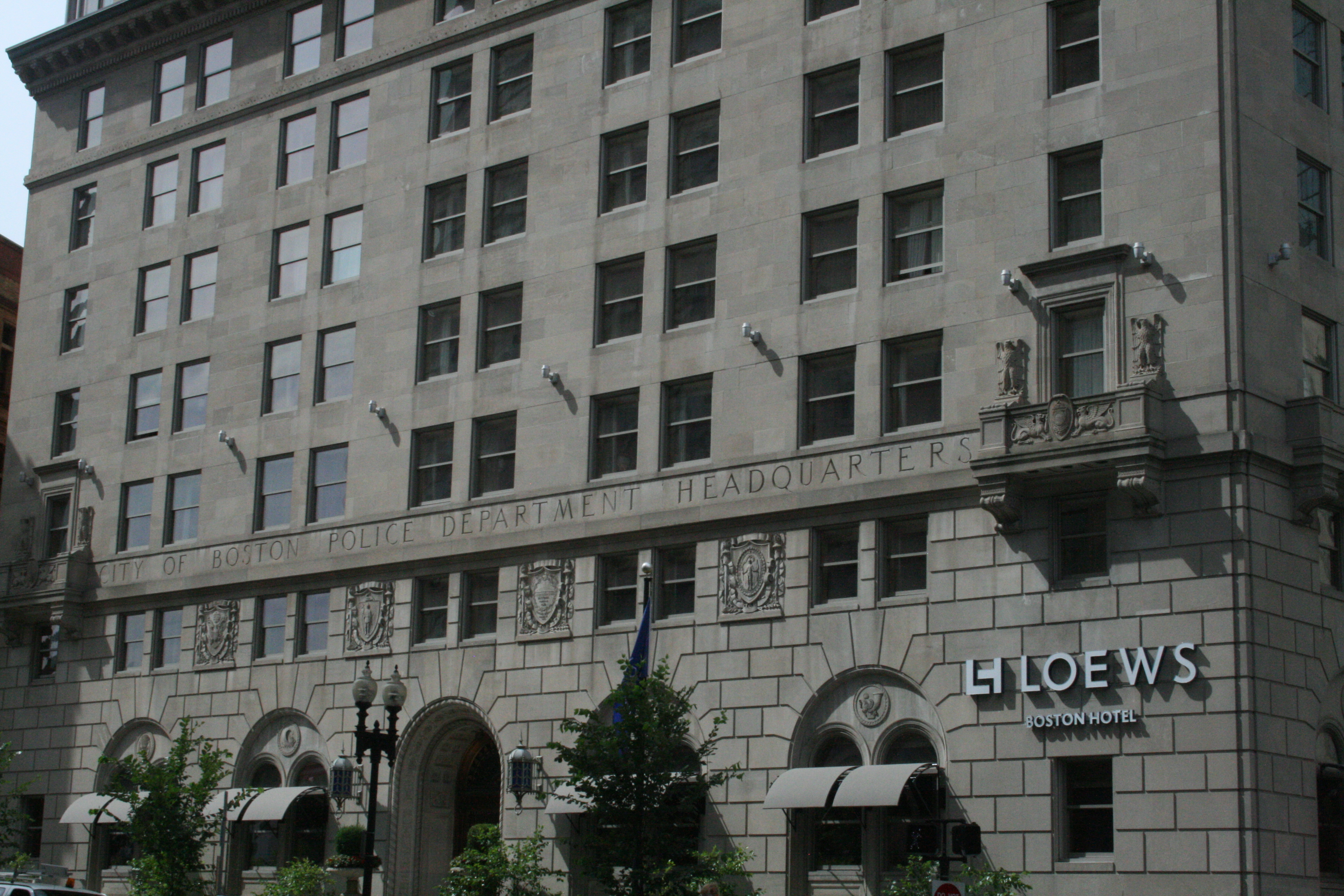
Before recycling, one of the buildings was a jail; the other was the Boston Police Department Headquarters. Not only did they “host” very different types of guests, but also they are on opposite sides of town –one near the river, the other near the old Hancock Tower.
Both are now very high-end luxury hotels – the Old Charles Street Jail is the Liberty Hotel (no pun intended, maybe?) located by the Charles Street T station, the Old Police Headquarters is the Loews Boston Hotel at 360 Stuart Street. The Loews hotel was previously called Jury’s Hotel – but the name was not a play on its former use, it was the name of the family group that bought it (there are several Jury’s Hotels in Ireland but not sure that they are related).
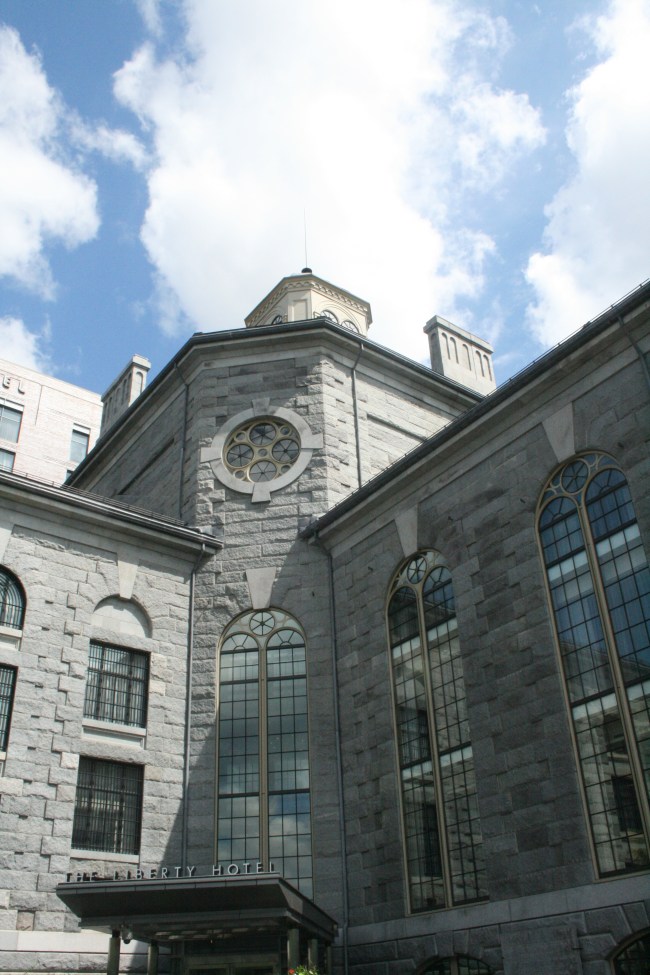
Both buildings have kept many of the features of their former use. The First impression of the Liberty Hotel is the massive granite blocks that comprise the structure of the building. Then, near the main entrance, is a large granite plaque – built into the wall – presenting all the information from when the jail opened in 1851. (By the way, when it opened, it was considered modern and incorporated all the latest theories on what incarceration should be all about.)
Upon entering, the lobby atrium is several stories high (must have been the central core of the old jail?). At different levels there are still what appear to be railings or catwalks from the old cell corridors. The eating and drinking lounges are called “Alibi” and “Clink”.
The Loews hotel has on its façade “Boston Police Department Headquarters”. Entering the building there is the initial feeling of entering – Police Department Headquarters. The entry doors are the original doors.
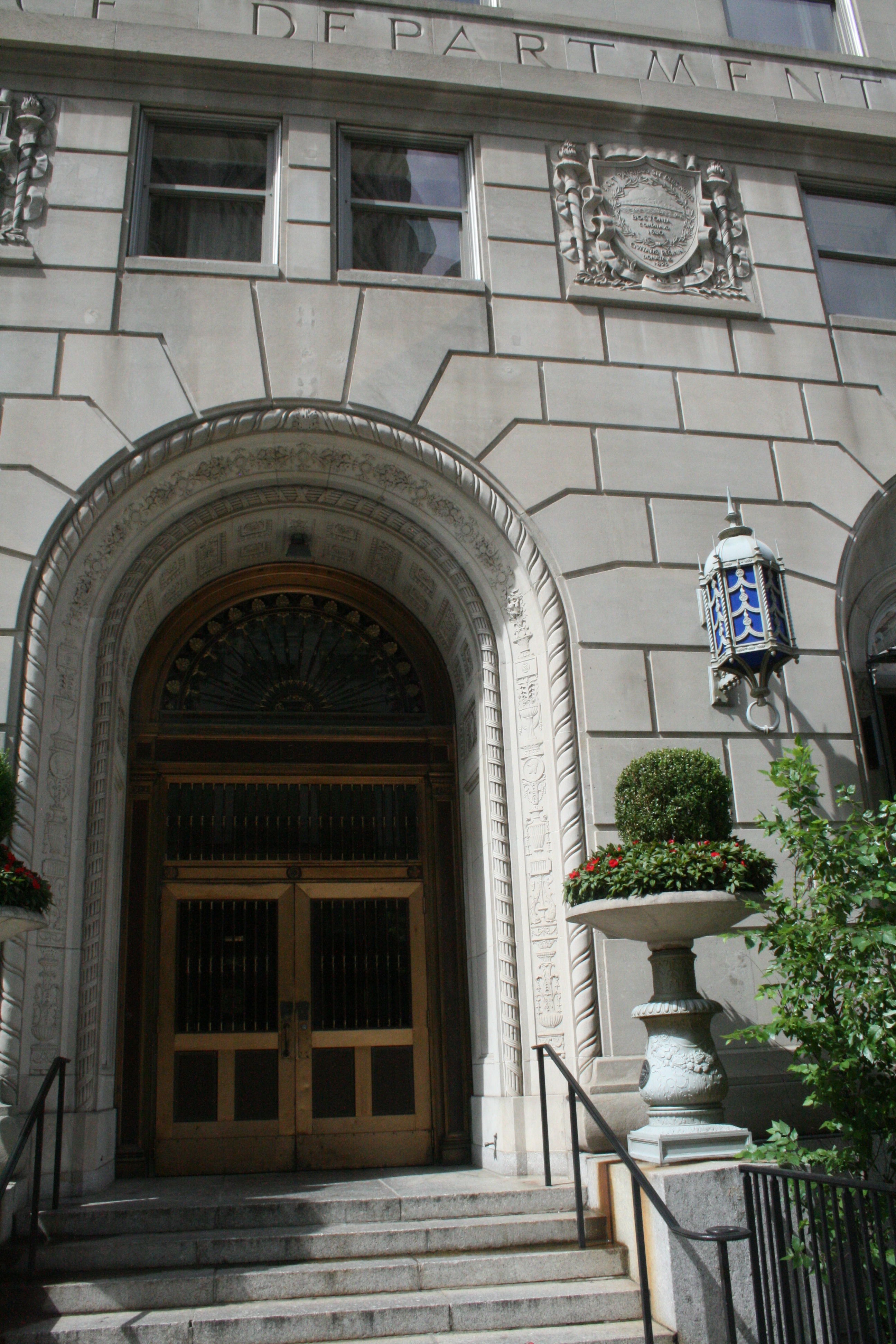
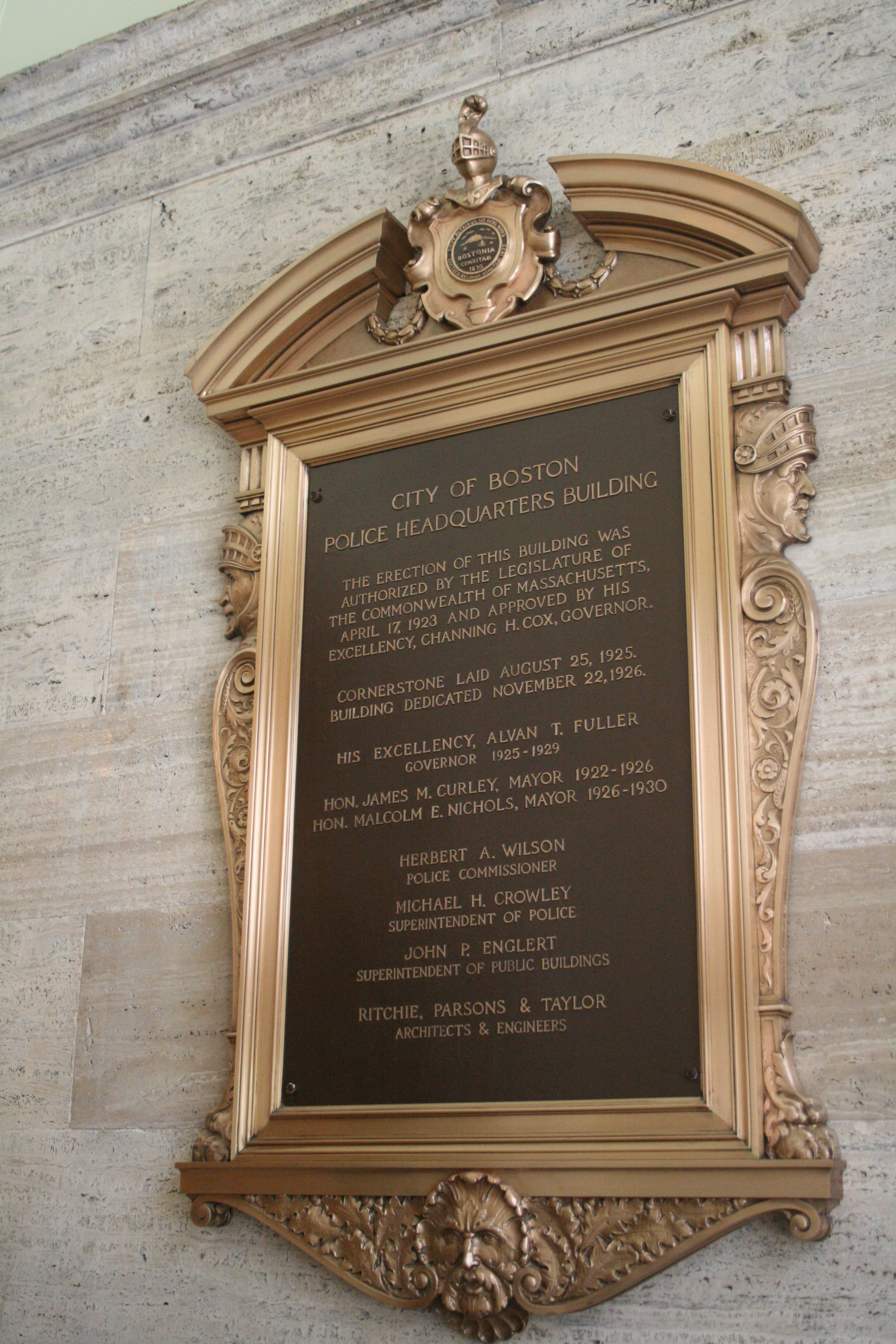
Once inside two other items are eye-catching. The first one is the plaque on the wall of the stairs leading to the reception desk. This is the original plaque from when the building was dedicated and opened in the 1920’s. (James Michael Curley is the mayor – more on that later.) The second one is the yellow and marble floor with black marble trimming. (Just what one would expect from the HQ of a large city police department.)
Fittingly, the bar here is called “Cuffs”.
Both hotels have had famous (infamous?) “Guests”. The Liberty Hotel “guests” included James Michael Curley –Mayor of Boston who actually won re-election while a guest there! Loews was also used as a holding tank. One of its “guests” was The Boston Strangler.
But, at the same time there is no doubt that both are high-end luxury hotels with the appropriate modern comforts, outstanding quality and courteous service. They have a dignified elegance about them, which is palpable from the minute one enters.
Up to you which side of the law you want to be on, but both places are definitely worth a visit/stay to view them, enjoy some libations and imagine what they must have been like in their previous “lives”. And remember, unlike previous “guests” you get to leave, of your own free will, whenever you are ready to do so.
MENDOZA BEYOND WINE: CACHEUTA THERMAL BATHS HOTEL AND SPA – BATHROBES PROVIDED
High desert country . . . abandoned railroad tunnels cut into the mountains as the road keeps climbing following the river path . . . a V-shaped valley with mountain sides rising over 2000 feet from the valley floor. Overhead, against a deep blue sky, without a cloud to be seen, circle Andean Condors riding the thermal air currents rising from the valley.
In the Andes at an altitude of 4100 feet, 24 miles south of Mendoza, at the end of this road, is the Cacheuta Thermal Baths Hotel and Spa.
Entering to the baths /spas via the hotel front desk and payment for the day taken care of, every visitor receives a white bathrobe and instructions to proceed to the check-in building for the baths. The spa takes the guests’ health very seriously. Every guest has a blood pressure test. Depending on the results, guests are advised which of the pools to use. (High BP, no very hot pool.) Changing into bathing suits and after a warm shower, guests proceed to the thermal pools. Clothes are left at the check-in counter, safe in a locker.
The seven thermal pools form a cascade overlooking the raging river. The higher up the cascade the pool is located, the hotter the water. Temperatures range from 108°F to 83°F. The best way to enjoy the pools is to start at the top, at the hottest, spend 5 minutes in each pool while working one’s way down to the last pool, a large pool with “warm” (83°F) water. Some of the pools have bubblers providing “massages” along the way.
At the top of the cascade, guests lather themselves with warm mud located in a tub. It is quite a sight to see 10-15 life-size, clay statues – the guests all mud-covered baking in the sun! WIthin15-20 minutes the mud has hardened and can then be washed off taking an outdoor shower of mineral-laden warm water. The skin is left feeling soft and smooth – like new.
Lunch, served at the hotel dining room, consists of buffet stations of various salads, local vegetables and the meats of an Argentinian “Asado” (BBQ). However, the most amazing part of lunch is the sight of over 100 guests all wearing their bathrobe – the formal lunch attire, mandatory for all guests.
A sight not to be missed – unfortunately, no pictures allowed.
A Viking in Downtown Boston
Traditionally, statues in Boston are of a President, Patriot, General, Civic Leader or illustrious Bostonians. But at the far end of the Commonwealth Avenue Mall (Kenmore Square side), stands a life-sized statue of Lief Ericsson, who was none of the above!
Lief Ericsson is believed to have traveled to North America, from Iceland and Grenland, and establish a colony in Newfoundland which he called Vineland. (You can see the remains of this colony in Western Newfoundland – almost Labrador.) In the late 1800’s there was a revival in interest in finding evidence of viking visits to North America – hence the statue. In fact there is also a carving of a viking ship on one of the bridges crossing the Charles River. It was erroneously believed that the remains of a boat found underwater were in fact those of a viking ship. Sad to say, that was not the case.
But back to Lief and the statue.
The statue was made in 1887 and is one of, if not the, oldest statues of Lief Ericsson in North America. The statue was sculpted by Ann Whatley one of the few women sculptors of her day. Finally, the statue has Leif facing west – looking for North America. Or maybe he’s looking for Fenway Park to see how the Red Sox are doing?
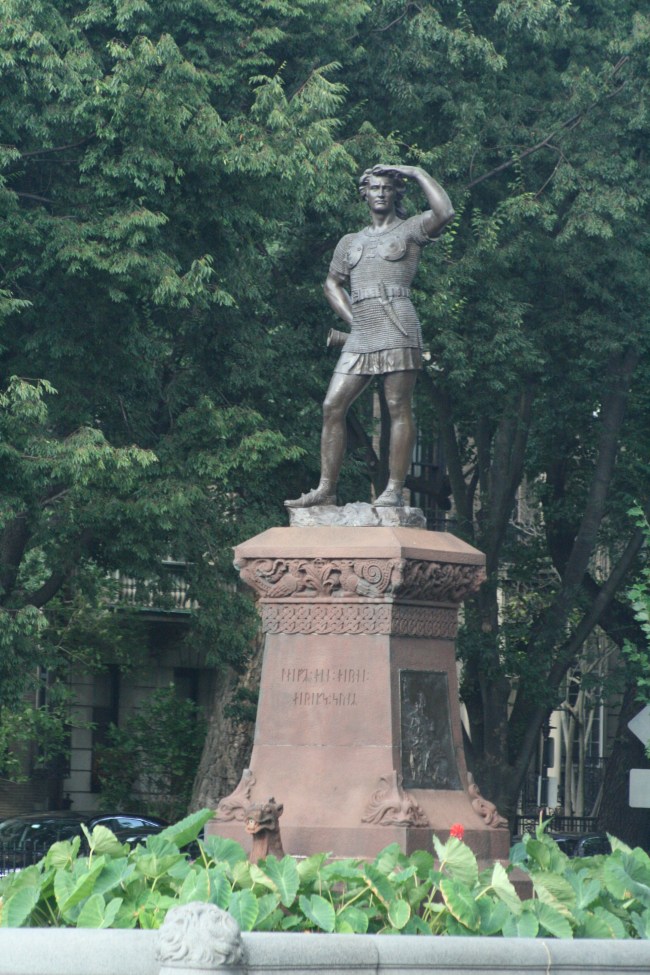 Combining the visit to Lief with a visit to Momma Duck and her ducklings (from Make Way for Ducklings) at the Garden end of the mall is a great opportunity to provide a little known piece of history to visitors, as well as seeing many other statues. And it is a very enjoyable 9-10 block walk.
Kayaking in Portsmouth Harbor
Down the creek (and up it too) WITH a paddle
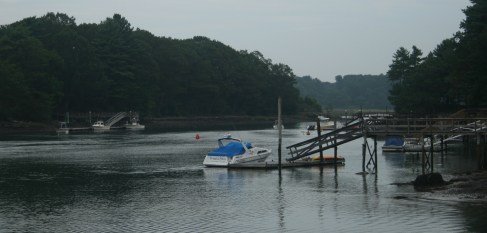 Sagamore Creek is one of several creeks that empty into the Piscataqua River and ultimately Portsmouth harbor. A small one-story building on Route 1-B is the home for Portsmouth Kayak Adventures. Taking a kayak trip down the Sagamore Creek provides a very different perspective on the strength of the tides in the harbor.
The 2½ hour tour starts when kayaks are put in the water from the ramp. The aim is to time the tides so that you are going out with the tide and paddling back up the creek with the incoming tide.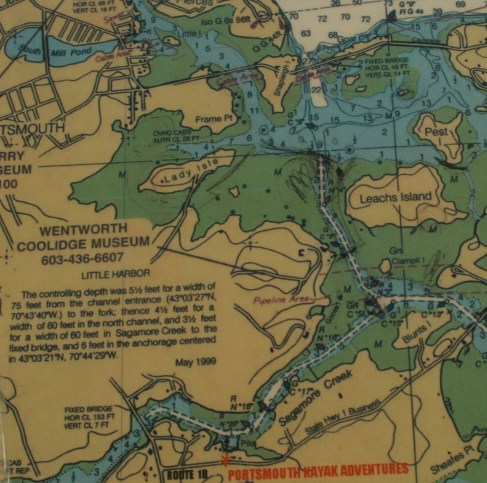
Paddling gently down the creek, the shore is teeming with bird life and dotted with the occasional house. Many of the birds are seagulls with some mallards. However,around and between the various islands at the mouth of the creek (which is the entrance to the river), the variety increases. The guide pointed out a Bald Eagle nest but the family, unfortunately, wasn’t home. On the other side of the island, there were seven Great Blue Herons fishing on the beach. As we approached them, they tookoff in flight and relocated themselves 50 yards further down the beach. This approaching and relocating was repeated twice.
Leaving the islands behind, the kayaks cross “open water” to the entrance to Little Harbor while keeping an eye out for boats entering and exiting the harbor. On the right is the old Navy Prison – a multi-story building presently closed. Prior to that one passed the Marriott Hotel Resort and Day Spa on Newcastle Island. The houses now start to get much bigger. One of the houses had been bought for $10 million, our guide told us.
After passing under a bridge you enter the Little Harbor. From the point of view of the kayak, there is not much that is little about this harbor. Docks are spread over the waterfront with the lobster boats moored beside. Many of the houses are made with shingles and painted bright colors – the classic New England Fishing Village. But seen from a kayak not a large boat!
The return is by a different route. The water is too shallow to allow navigation between the islands. There is a large sandbank crowded with seagulls.
The return did not catch the incoming tide. It was not quite at low tide yet. This leads to a strenuous upper body exercise. Amazing how strong a 2-3 mile per hour current can be when going against it. Arriving at the ramp, the kayaks are taken out, life jackets returned to their place and the tour is over.
However, right next-door is B.G.s Seafood restaurant. Sitting outside on the balcony, facing downstream, is the best way to enjoy a meal or snack and reflect upon the kayak ride down the creek and into the harbor.
Friesians spotted in Vermont
Outside of Townsend, at the end of Maggie Ladd Road, are the Friesians. What are Friesians and what are they doing in Vermont?
Friesians are horses, but to say that Friesians are horses is to say that a Rolls Royce is a car. Friesians are rather large (up to 17 hands at the top of the shoulder) horses with a colorful history. The breed originated in the Netherlands. During the Middle Ages they were used as war horses capable of carrying a knight in armor. At several times in its history, the breed almost became extinct.
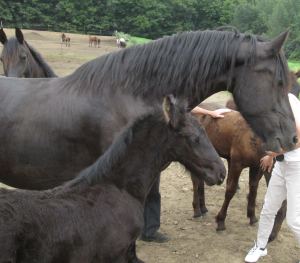 Friesians are recognized by their shiny black color, long, thick mane (often braided!) and tail, and what are called “feathers” (long black hairs left uncut on purpose) on the lower legs. However, when they are born, their coat is a brown, almost down-like and fuzzy in texture. This coat eventually changes and becomes the classic black. The Friesian walks and canters with an elegant and distinguished gait – reminds one of a Tennessee Walking Horse or a Spanish “Caballo de Paso Fino”.
Many people may have seen these horses without recognizing them. Friesians have appeared in several movies (e.g., The Mask of Zorro, Alexander, The Chronicles of Narnia). Most recently they had an appearance in The Hunger Games Tribute Parade.
So how did they get to Vermont? Robert Labrie was in the construction/road maintenance business. 15 years ago, he and his wife Laurie sold that business and started exploring what to do next. They had a small farm with three stalls and Bob decided to get into the “horse business”. He went to the Equine Affaire, and fell in love with the Friesians he saw there. The rest is history. To quote Laurie, “The three stall venture now has 88 horses” and is called “Friesians of Majesty”.
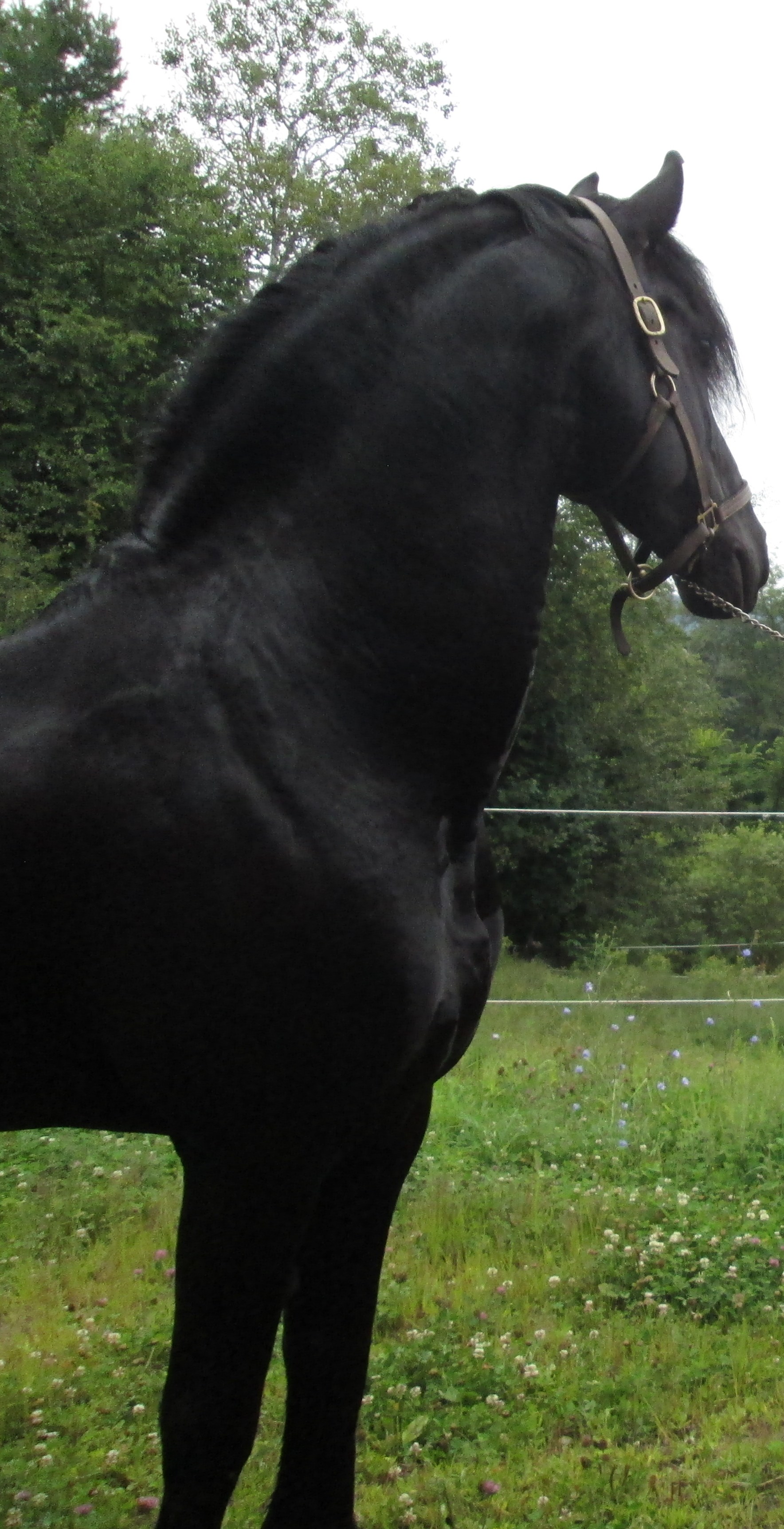
The star at Friesians of Majesty is Othello. He has received the highest award for a Friesian Stallion (FPZV 1st Premium Approved Stallion) and is a beautiful but also very gentle animal. He stands 17 hands tall, a dark black color with a striking mane, tail and feathers. Watching the horse walk and canter is like watching a concert pianist playing a Beethoven piece – full of energy while moving gracefully over the ground, feet rising and falling in cadence.
The farm provides a variety of activities for visitors including: training, riding lessons, driving lessons, camps for girls and women, carriage rides and in the winter sleigh rides through the woods and fields. Riders are of all ages.On certain dates they put on a Majestic Friesian Performance. This show put to music demonstrates how the Friesians are used for riding and for driving. The performance schedule can be found at the website http://www.friesiansofmajesty.com/. Reservations are required.A tour of the farm represents a unique opportunity to see and interact with some beautiful horses, and learn about them while visiting southern Vermont. Well worth the trip.
 pwtravels
Recent Comments